
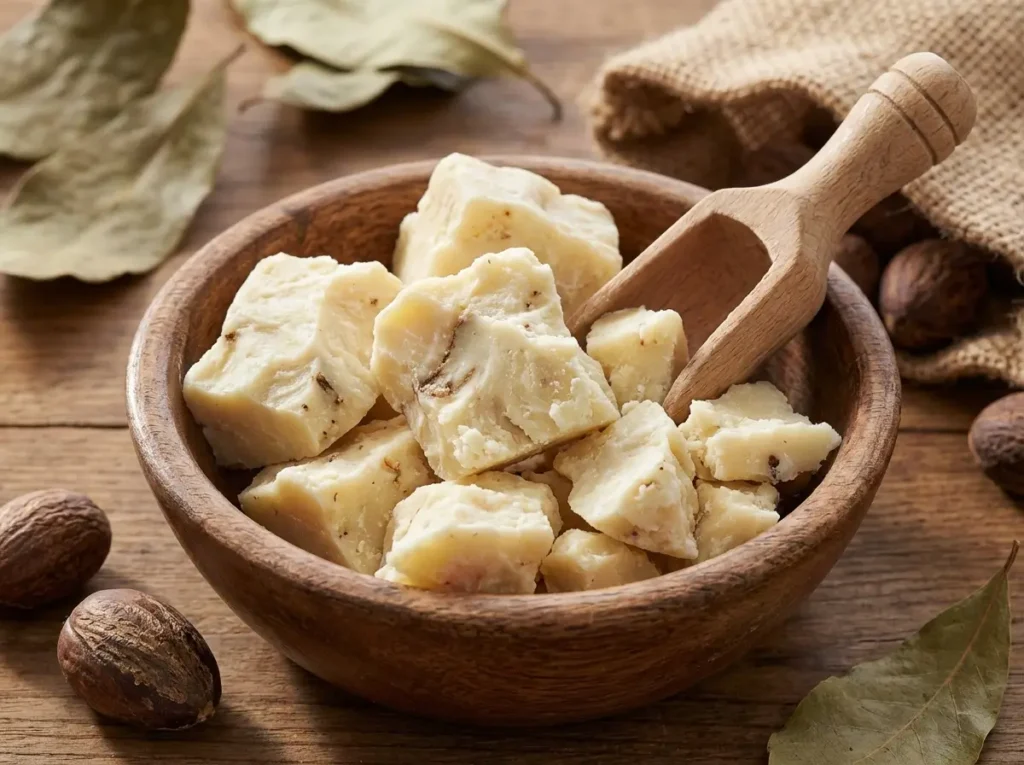
Shea Butter 101 for Buyers: How to Choose the Right Grade (and Why It Matters)
Shea butter is one of the most trusted ingredients in body care, hair care, and sensitive-skin formulas because it helps soften, seal in moisture, and support the skin barrier. Dermatology and health experts commonly point to shea’s emollient (softening) and occlusive (moisture-sealing) effects—especially helpful for dry, rough, or compromised skin.
Below is a practical guide to choosing the right shea butter for your customers (and for your product line), with quality cues you can use when buying.
1) What makes shea butter so effective?
Shea butter is rich in fatty acids that help condition the skin and reduce moisture loss. Research and clinical discussions around barrier care often connect these lipid components with improved hydration and barrier support.
This is why shea butter shows up so often in:
- Body butters and lotions for very dry skin
- Hand creams, foot creams, elbows/knees “repair” products
- Lip care (balms, masks)
- Gentle moisturizers for eczema-prone routines (when tolerated)
2) Unrefined vs. refined: which should you sell?
Unrefined (raw) shea butter
Best for: customers who value “natural,” richer feel, and “traditional shea” experience.
Typical traits: ivory-to-yellow color, nutty/earthy aroma, more variation from batch to batch (because it’s less processed).
Unrefined shea is often marketed as the most “authentic” option, and many shoppers specifically search for it.
Refined shea butter
Best for: customers who want a neutral scent, smoother texture, and consistent look/feel across batches.
Typical traits: whiter color, little-to-no odor, more uniform texture—often easier to formulate with for brands that want a clean sensory profile.
Buyer tip: Refined doesn’t automatically mean “worse”—it usually means more consistent. Unrefined doesn’t automatically mean “better”—it often means more natural aroma and batch variation. The right choice depends on what your customers value most.
(These differences are widely described in ingredient spotlights and buyer guides from shea-focused brands and educators.)
3) Quality checklist: what to look for when sourcing
When evaluating suppliers (or explaining quality to your customers), focus on:
- Origin & traceability: Can the supplier state country/region of origin and provide basic documentation (lot/batch info)?
- Processing method: Especially for refined shea—ask how it’s refined and what steps are used.
- Sensory cues (simple but useful):
- Unrefined: natural scent is normal; slight graininess can happen and is often fixable with proper tempering.
- Refined: should be neutral-smelling and uniform.
- Packaging & freshness: Shea should be protected from excessive heat and stored sealed to reduce oxidation and odor changes over time.
4) Sensitive skin, eczema-prone customers, and safety notes
Moisturizing is a cornerstone of eczema care because moisturizers help protect the skin barrier and reduce water loss.
Shea butter is commonly mentioned as an ingredient many people tolerate well, but reactions can still happen—especially in very sensitive users—so it’s smart to recommend:
- Patch testing (small area, 24–48 hours)
- Choosing fragrance-free products if they’re eczema-prone
- Being mindful of allergies (some sources note possible reactions in people sensitive to latex-like proteins)
For acne-prone facial use, some people do great with shea; others find it too heavy. A cautious “test first” recommendation is safest.
5) Ethical sourcing: why it matters to modern buyers
A growing number of customers care about where shea comes from and who benefits. The shea value chain supports millions of women across West Africa, and ethical sourcing can be a meaningful part of your brand story (and a real differentiator on product pages).
If you sell shea butter (or products made with it), consider highlighting:
- supplier transparency and community impact
- fair-trade or women’s cooperative partnerships (when verified)
- responsible sourcing and long-term supply stability
Bottom line
If your customers want natural aroma + traditional feel, lead with unrefined. If they want neutral, consistent, easy-to-formulate shea, offer refined—and explain why that consistency is a feature, not a flaw.
Links
- Shop the Shea Butter Collection
- Read More Blog